
Amor R. Mehta, MD, Advances Comprehensive Epilepsy and Neurological Care Through Early Diagnosis, Specialized Treatment and Patient Education
Board-certified neurologist and epilepsy specialist Amor R. Mehta, MD, founder of the Neurology Center for Epilepsy and Seizures, LLC, has built his career around improving the diagnosis and management of epilepsy while expanding access to comprehensive neurological care.
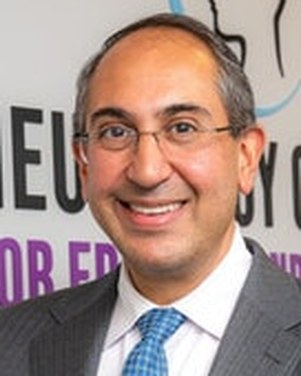
MARLBORO, N.J.: Dynamo Times highlights Amor R. Mehta, MD, a board-certified neurologist and epilepsy specialist whose career has centered on the diagnosis, treatment and long-term management of epilepsy and other neurological disorders.
Dr. Mehta is the founder of the Neurology Center for Epilepsy and Seizures, LLC in Marlboro, New Jersey. His practice focuses on helping patients and families navigate neurological conditions through specialized evaluation, advanced diagnostic testing, individualized treatment planning and continuing education.
His professional background combines formal training in neuroscience, medicine, neurology, clinical neurophysiology and epilepsy with years of direct patient care. In 2025, The Inner Circle acknowledged Dr. Mehta as a Pinnacle Lifetime Member for his contributions to advancing neurology and epilepsy care.
Dr. Mehta's interest in neurological medicine developed from a strong academic foundation in neuroscience. He earned a Bachelor of Science in Neurosciences from Northwestern University before pursuing his medical education at New York Medical College in Valhalla, New York. After earning his Doctor of Medicine degree, he completed an internship at UMDNJ, now associated with Rutgers New Jersey Medical School.
He then entered specialized neurological training at New York University-affiliated hospitals, completing a residency in neurology followed by fellowship training in clinical neurophysiology and epilepsy. He is board-certified in Neurology and Epilepsy through the American Board of Psychiatry and Neurology.
Epilepsy is a neurological disorder characterized by a predisposition to recurrent seizures, but the condition can vary substantially from one patient to another. Different seizure types can produce different symptoms: some episodes may involve obvious convulsions, while others can appear as periods of staring, altered awareness, unusual sensations, behavioral changes or brief interruptions in normal activity. That variability makes specialized neurological evaluation particularly important.
Dr. Mehta's practice places epilepsy and seizure disorders at the center of its clinical work. His approach includes determining whether a patient's episodes are epileptic seizures, identifying the type of seizure involved, evaluating possible causes and developing a treatment strategy appropriate to the individual. For patients and families, obtaining a clearer diagnosis can be an important first step toward understanding symptoms that may have been difficult to explain.
One of the principal tools used in epilepsy evaluation is the electroencephalogram, or EEG. EEG testing records electrical activity in the brain and can help physicians identify patterns associated with epilepsy and certain seizure disorders. In some situations, a short routine EEG may not capture enough information. Long-term video EEG monitoring can provide a more extensive record by combining electrical brain-wave data with synchronized video observation, allowing physicians to compare a patient's physical or behavioral event with the electrical activity occurring in the brain at the same time.
A major component of Dr. Mehta's vision is an "Epilepsy Medical Home" model. The concept is designed to bring multiple aspects of epilepsy care together rather than forcing patients to navigate a fragmented series of unrelated services. The Neurology Center for Epilepsy and Seizures has described this model as a way to provide advanced and comprehensive multidisciplinary epilepsy care, including neurodiagnostic procedures such as long-term video EEG monitoring, within one coordinated environment.
Although epilepsy represents a major focus of Dr. Mehta's work, his clinical experience extends into other areas of neurology. His practice has addressed neurological conditions including complex migraine, cognitive disorders and dementia, Alzheimer's disease and certain neurological complications reported following COVID-19.
Neurological illness can affect much more than a test result. For patients with seizures, uncertainty about when another event may occur can influence work, school, transportation, independence and family life. Dr. Mehta's professional approach emphasizes helping patients understand their diagnosis, available testing and treatment options: a better-informed patient can participate more actively in decisions about care.
Dr. Mehta is certified in both neurology and epilepsy by the American Board of Psychiatry and Neurology. He has also maintained involvement with professional organizations including the American Epilepsy Society and the American Academy of Neurology.
Dr. Mehta has identified expanded clinical research in epilepsy and other neurological conditions as an important part of his future work, along with enhancing early diagnostic techniques and increasing public education surrounding neurological health.
Dynamo Times recognizes Amor R. Mehta, MD, for his contributions to epilepsy and neurological care and for his continuing work to make specialized diagnosis, treatment and patient education central components of comprehensive neurological medicine.
About Neurology Center for Epilepsy and Seizures, LLC
Amor R. Mehta, MD, is a neurologist and epilepsy specialist and the founder of the Neurology Center for Epilepsy and Seizures, LLC in Marlboro, New Jersey. He earned a Bachelor of Science in Neurosciences from Northwestern University and his Doctor of Medicine degree from New York Medical College. He completed internship training at UMDNJ/Rutgers and neurological residency and fellowship training through New York University-affiliated programs. Dr. Mehta is board-certified in neurology and epilepsy through the American Board of Psychiatry and Neurology. He is affiliated with the American Epilepsy Society and the American Academy of Neurology.