When Regulators Asked How Reactor Operators Are Trained, Elery M. "Rusty" Shoemaker Brought Decades of Answers
As manager of accreditation at the Institute of Nuclear Power Operations, the Acworth engineer briefed the Nuclear Regulatory Commission in 2017 on how the industry holds operator training to account, work rooted in his own years as a licensed senior reactor operator.
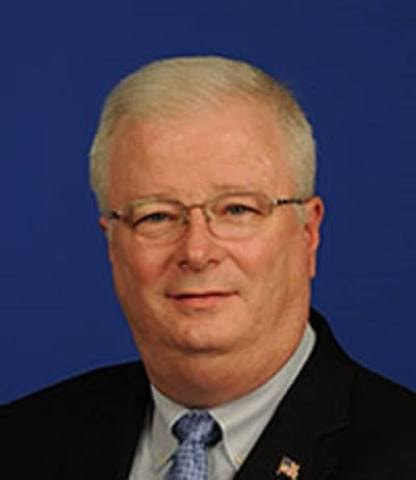
ACWORTH, Ga. On a Friday in January 2017, Rusty Shoemaker took a seat before the Nuclear Regulatory Commission at its headquarters in Rockville, Maryland, to explain how the American nuclear industry checks its own operator training. He brought eight slides and a long record behind them: 21 years at the Institute of Nuclear Power Operations and, before that, 15 years at the H. B. Robinson plant in South Carolina.
He was then INPO's manager of accreditation, a post he had held since September 2014. The job placed him at the center of the system that decides whether training for the people who run American reactors measures up.
He walked the commissioners through it. A station first assesses its own training. An INPO team then visits. Finally the independent National Nuclear Accrediting Board meets with station leaders and decides whether to grant accreditation, renew it, put a program on six months of probation, or withdraw it. The cycle comes around every six years.
Outsiders watch the process. NRC staff periodically observe accreditation visits, plant evaluations and board meetings, and some board members are nominated by the NRC. Training evaluators also join every INPO plant evaluation and WANO peer review, checking whether training actually improves how people do their jobs.
Dr. Shoemaker did not oversell the results. Operator performance across the fleet had plateaued at roughly a medium level, he told the commission, and INPO had formed a working group with the industry under a new Operator Fundamentals Action Plan. When Chairman Stephen Burns asked where that effort would begin, he pointed to the simulator, saying an early focus would be how well simulator training was working.
He also noted that the last operations training program placed on probation dated to 2013, and that none had been placed on probation since.
He knows the view from the plant side. From 1980 to 1995 he worked for Carolina Power & Light at Robinson, and in 1983 he earned a senior reactor operator license for the station's Westinghouse pressurized water reactor. He moved to INPO in 1995.
His schooling traces the same path from machines to people: physics at Thomas More University, mechanical engineering at the University of Kentucky, then a master's degree in 2012 and a doctorate in 2022 in organizational leadership from Nova Southeastern University. INPO certified him as an event investigator in 2002 and as an instructor and facilitator in 2003. He became a Project Management Professional in 2005 and a Distinguished Toastmaster in 2013.
Today he serves as a senior corporate team leader across INPO and the World Association of Nuclear Operators. He is a lifetime member of the American Nuclear Society, a past member of the American Society of Mechanical Engineers, and was named a Kentucky Colonel in 2022. After retirement he plans to keep working on safety through service on nuclear safety review boards.
Away from work in Acworth, his time goes to family, photography, biking, yard work and gardening. At Burnt Hickory Baptist Church he serves as a deacon and teaches Sunday school.
Dynamo Times recognizes Elery M. "Rusty" Shoemaker, EdD, PMP, DTM, for his work holding nuclear operator training to a high standard, and for a career spent making sure the people at the controls are ready for the job.
About Institute of Nuclear Power Operations / WANO
Elery M. "Rusty" Shoemaker, EdD, PMP, DTM, is a senior corporate team leader with the Institute of Nuclear Power Operations and the World Association of Nuclear Operators, where he has worked since 1995 and served as manager of accreditation from 2014. He began his career in 1980 with Carolina Power & Light at the H. B. Robinson plant in South Carolina, where he held a senior reactor operator license. He holds degrees in physics and mechanical engineering and a master's degree and doctorate in organizational leadership from Nova Southeastern University.