
Stan Schekall's Recent Work Runs From a Wheelchair You Steer by Leaning to a Satellite Built to Run Itself
The Santa Clara engineer behind GF Hi Tech is applying four decades of chip and embedded design to mobility, spacecraft autonomy and the spread of artificial intelligence into everyday electronics.
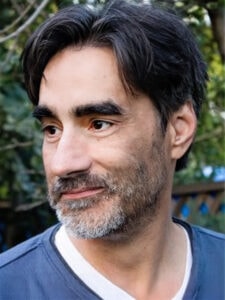
SANTA CLARA, Calif. Picture a wheelchair that goes where its rider leans. Shift forward and it moves, tilt to one side and it turns. Stan Schekall helped design that machine with Method Mobility, and for people with little use of their hands, including people living with paraplegia, it offers a way to get around that does not depend on grip.
His other current project sits a long way from the sidewalk. Schekall has been consulting on a government spacecraft microsatellite project with Redwire, a company working under contract to NASA. His job is to design the systems that let the satellite run on artificial intelligence, so that it can look after many of its own functions once it is in orbit.
Both jobs come through GF Hi Tech, the Santa Clara company he has led since 2016. The firm builds hardware and software for embedded systems, and Schekall's days there are a mix of client calls, deadlines, circuit board layouts and code. He is chief executive and engineering project lead at once, which means he still does much of the design himself.
Clients tend to mention his persistence. Kevin Dariani of Pactron credits the company with delivering many automated test equipment projects and calls Schekall dedicated and very knowledgeable about application test development. Another client, Craig Stuber, said Schekall takes hold of a new problem and does not let go until it is solved, and that he is fun to work with besides.
The project he points to as his best came around 2020 with Jasper Display. Schekall fit HDMI video handling onto a single field programmable gate array, so that an engineer could plug a cable into a display and process images in real time. With an ARM processor on board, the unit offered roughly the computing power of a modern smartphone in a package about the size of a deck of cards. It was cheap, simple to use and easy to adapt through its Verilog code, and it helped lead to the company's acquisition.
That kind of compact design draws on training he began in Nebraska. Schekall earned a Bachelor of Science in electrical engineering from the University of Nebraska in Lincoln in 1985 and a Master of Science there in 1987, studying image processing and digital communication.
He went to work in 1988 as an ASIC engineer at Lockheed Missiles and Space Company, today part of Lockheed Martin, and stayed until 1992. He then spent five years designing custom chips at Seagate Technology, where in 1995 he received a United States patent for correcting header information in magnetic disk drives.
The following decade took him through Intrinsix, now part of Cadence Design Systems, from 1999 to 2003, and contract work for Qualcomm Technologies from 2002 to 2005, where he built a GPS module for use inside cellphone chips. He designed prototypes as a senior staff engineer at Nano Integrated Solutions until 2008, then spent eight years at Evans Analytical Group, now Eurofins EAG Laboratories, building test systems around AVR, ARM and FPGA hardware.
Schekall is a senior member of the Institute of Electrical and Electronics Engineers and has written technical articles published by IEEE. He expects artificial intelligence to take on a growing share of the control inside electronic systems, and he plans to keep his own work at that edge, where computers increasingly manage the hardware around them.
Away from the bench he makes art and sculpture, and he likes spending time with his children.
Dynamo Times recognizes Stan Schekall for nearly forty years of electronics engineering and for current work that puts embedded intelligence to use in mobility and in space.
About GF Hi Tech
Stan Schekall is chief executive officer and engineering project lead of GF Hi Tech in Santa Clara, California, which designs hardware and software for embedded systems. He holds bachelor's and master's degrees in electrical engineering from the University of Nebraska in Lincoln and is a senior member of IEEE. His career includes chip design roles at Lockheed Missiles and Space Company, Seagate Technology, Intrinsix and Qualcomm Technologies before he took the helm at GF Hi Tech in 2016.