
Stan Schekall Advances Embedded Systems, Electronics and Engineering Innovation Through GF Hi-Tech
GF Hi-Tech founder and engineering leader Stan Schekall brings more than three decades of experience to embedded systems, hardware and software development, circuit design and emerging artificial intelligence applications.
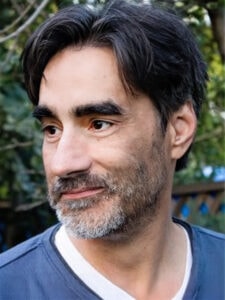
SANTA CLARA, Calif. — The Dynamo Times highlights Stan Schekall for a career spanning more than three decades in electronics engineering, embedded systems, computing technologies and advanced product development.
As the founder and leader of GF Hi-Tech since 2016, Mr. Schekall has focused on developing practical engineering solutions that bring hardware and software together. His expertise encompasses embedded systems, circuit design, software development, system integration and product development. At a time when physical devices are becoming increasingly intelligent, the ability to understand both electronics and computing has become particularly valuable — and Mr. Schekall's professional work exists directly at that intersection.
Mr. Schekall has spent more than 30 years developing experience in electronics engineering and computing technology. Throughout that period, the technology industry has undergone extraordinary transformation. Computers have become dramatically smaller and more powerful. Connected devices have become commonplace. Software has become increasingly integrated into physical products. Artificial intelligence is now expanding what electronic systems can accomplish. Engineers working through these changes have had to continuously adapt their knowledge, and Mr. Schekall's career demonstrates that evolution.
Since 2016, Mr. Schekall has led GF Hi-Tech, a platform through which he works directly on engineering projects involving both hardware and software. His responsibilities extend beyond executive leadership — he remains directly involved in engineering, including communicating with clients, understanding project requirements, designing circuit boards, developing software and managing projects that combine multiple technologies. Rather than moving entirely away from engineering as his responsibilities increased, Mr. Schekall has continued participating directly in technical development.
Embedded systems are an important component of modern technology. Unlike a traditional desktop computer designed to perform many general tasks, an embedded system is typically created to perform specific functions within a larger product. These systems can be found throughout everyday life — in vehicles, medical equipment, industrial machinery, consumer electronics, communications devices, aerospace systems, smart appliances and modern infrastructure. As products become increasingly connected and intelligent, embedded computing continues to expand into new applications.
One of the defining aspects of Mr. Schekall's work is his ability to bridge hardware and software. Hardware creates the physical platform; software determines how that platform behaves. When the two are designed effectively together, engineers can create systems that are smaller, faster, more efficient and more capable. Mr. Schekall's professional experience includes developing solutions in which circuit design, computing and software must operate as one integrated system.
One notable example of Mr. Schekall's engineering work occurred during his involvement with Jasper Display around 2020. He developed a compact system capable of processing HDMI video using a single field-programmable gate array, or FPGA, chip — allowing real-time image processing through a straightforward HDMI connection to a display. FPGA technology gives engineers the ability to configure hardware for specialized computing tasks, and developing a compact solution around this technology requires expertise involving electronics, digital logic and system design. The technology became a useful development tool for engineers and formed part of his broader work in advanced electronics.
Artificial intelligence represents another emerging area of interest within Mr. Schekall's work. AI is frequently discussed as software, but intelligent applications ultimately depend upon physical computing systems capable of processing information. Embedded artificial intelligence can allow devices to perform sophisticated tasks without depending entirely on distant cloud computing systems, with applications potentially involving robotics, industrial systems, aerospace, autonomous devices and intelligent sensors.
Mr. Schekall's recent professional work has also extended into advanced aerospace technology. His published professional profile describes consulting work on a spacecraft microsatellite project involving Redwire under contract to NASA, with responsibilities including developing systems intended to allow satellite technology to operate with artificial intelligence capabilities. Space systems present demanding engineering challenges — size and weight can be limited, power must be carefully managed, and systems must operate reliably in environments where physical repair may be impossible.
Mr. Schekall developed his formal engineering foundation at the University of Nebraska–Lincoln, earning a Bachelor of Science in Electrical Engineering in 1985 and a Master of Science in Electrical Engineering in 1987. Electrical engineering provides the technical foundation for many of the technologies that became central to his career: circuit design, digital systems, computing hardware, signal processing and electronics.
Mr. Schekall has remained connected to the broader engineering community as a Senior Member of IEEE — one of the world's major professional organizations for electrical engineering, electronics and related technologies. Professional involvement provides engineers with opportunities to remain connected with developments occurring across a rapidly changing industry.
Engineering is often viewed primarily as a mathematical or technical discipline, yet creativity plays an important role. Complex engineering problems do not always have obvious solutions. Mr. Schekall's interests outside engineering include art and sculpting — creative pursuits that complement the problem-solving mindset he applies professionally. Both art and engineering involve taking an idea and turning it into something tangible.
The boundaries between traditional electronics, software and artificial intelligence continue to disappear. Future products will increasingly combine all three — devices will become more capable of sensing their environments, software will interpret increasing amounts of information, and AI will allow systems to make more sophisticated decisions. Engineers who understand these different layers will play an important role in determining how those technologies develop. Mr. Schekall's work at GF Hi-Tech places him within this convergence.
The Dynamo Times recognizes Stan Schekall for his longstanding contributions to engineering and for a professional career characterized by technical expertise, entrepreneurship, creativity and continued innovation.
About GF Hi-Tech
Stan Schekall is the founder and leader of GF Hi-Tech and an experienced electrical engineer whose career spans more than three decades. His expertise includes embedded hardware and software, circuit design, system integration, product development and advanced computing applications. Mr. Schekall earned his Bachelor of Science in Electrical Engineering in 1985 and Master of Science in Electrical Engineering in 1987 from the University of Nebraska–Lincoln. He is a Senior Member of IEEE and has led GF Hi-Tech since 2016. His professional work continues to focus on developing practical engineering solutions while exploring emerging applications involving embedded computing and artificial intelligence.